

Introduction
A failed power steering pump doesn’t just compromise steering; it introduces dangerous variables into heavy truck operation. As a procurement or operations manager overseeing a workshop in Peru, the USA, or South Africa, you know that sending a truck out for a third-party repair can take days. Equipping your in-house technicians with the knowledge and parts to perform a swift replacement is a competitive advantage. At ATOSPUMPS, we empower our B2B clients not only with premium pumps for DEUTZ, FORD, ISUZU, and SCANIA but also with the technical expertise to install them correctly. This masterclass details the precise procedure for replacing a power steering pump, ensuring the job is done safely, efficiently, and without comebacks. Read on to learn how a quality part and proper technique eliminate steering headaches.
Pre-Replacement Diagnostics and Safety Protocol
Before unbolting a single component, a methodical diagnosis confirms the pump is the culprit and not a blocked filter, a seized steering rack, or a collapsed hose. Hook up a pressure gauge and perform a power steering pump pressure test at idle and under load. If the dead-head pressure fails to reach the relief valve rating, and the pump is noisy, you have confirmed internal failure. Safety is paramount: park the truck on a level concrete pad, chock the rear wheels, disconnect the battery negative terminal, and allow the engine to cool to prevent burns from hot fluid or exhaust manifolds. Wear safety goggles, as hydraulic fluid can be injected under skin by pinhole leaks. For procurement managers, standardizing this safety checklist across all your depots ensures consistent, injury-free maintenance.
Tooling, Parts, and Fluid Requirements
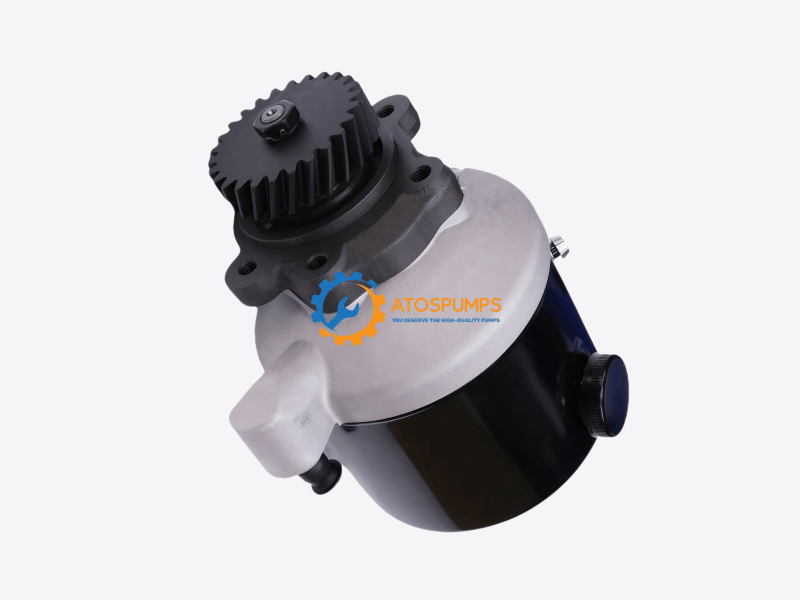
Gather all necessary items before starting. You will need a serpentine belt removal tool, metric and SAE socket and wrench sets, a torque wrench, a fluid catch pan, line wrenches for the high-pressure hose fitting, and the correct replacement O-rings or copper washers. The star of the job, naturally, is a new ATOSPUMPS power steering pump designed specifically for your truck’s engine model, be it a MITSUBISHI Fuso or a FOTON Auman. We highly recommend replacing the power steering fluid reservoir filter (if equipped) and flushing the system with fresh fluid that meets the vehicle manufacturer’s Dexron or cold-climate specification. Having an ATOSPUMPS pump ready on the workbench, with its mounting faces spotlessly clean and its ports plugged, allows the technician to work without interruption.
Step-by-Step Removal Procedure
The first physical step is relieving belt tension and slipping the serpentine belt off the pump pulley. Inspect the belt for glazing or cracks; if it’s contaminated with power steering fluid, it must be replaced. Place the drain pan under the pump and disconnect the low-pressure return line, allowing the reservoir and lines to drain. Next, using a proper line wrench to avoid rounding the fitting, carefully crack open the high-pressure line flare nut. Expect some residual fluid spillage. With the lines safely tied aside, remove the mounting bolts securing the pump to the engine block or bracket. Note the exact position of any shims used for pulley alignment; these must be transferred to the new unit. Ease the old pump out, and compare it side-by-side with your new ATOSPUMPS unit to verify identical pulley offset, port thread size, and mounting ear configuration.
How to Install the New ATOSPUMPS Power Steering Pump
Transfer any mounting studs or sensors from the old pump to the new one, cleaning threads and applying a touch of medium-strength thread locker if specified. Position the new pump into the bracket, hand-starting all bolts before torquing them sequentially to the manufacturer’s specification in a cross pattern to avoid distorting the housing. This is where ATOSPUMPS’ precision machining shines: our consistent casting dimensions mean the pulley aligns perfectly without the need for makeshift shims. Install the high-pressure line using new sealing washers, torquing to spec, then reconnect the return line. Before installing the belt, pour fresh fluid into the reservoir to pre-fill the pump, and manually rotate the pulley by hand several times. This lubricates the internal vanes and prevents a dry start seizure, which is the number one killer of new pumps.
The Bleeding Procedure and Final Verification
With the belt tensioned and the battery reconnected, the critical bleeding process begins. Jack up the front axle so both front wheels are off the ground. With the engine off, slowly turn the steering wheel lock-to-lock at least ten times to purge air from the rack into the reservoir. Top up the fluid level continuously. Next, start the engine briefly for a few seconds, check for leaks, then shut it off and repeat the manual lock-to-lock cycles. Finally, start the engine and allow it to idle while gently turning the wheel. If a groaning noise persists, air remains; never hold the wheel against the lock for more than a few seconds as this can overheat the fluid. Once the system is silent and the fluid level is stable, perform a final road test. A correctly installed ATOSPUMPS pump will deliver that immediate, low-noise, responsive steering feel that confirms the repair is a success.
The Economic Case for In-House Replacement
For a Chief Procurement Officer managing cost per mile, understanding how to replace power steering pump in-house transforms a cost center into a value driver. Instead of paying inflated dealer labor rates and markups on OEM parts, your own technicians can install ATOSPUMPS’ certified units at a fraction of the cost, with turnaround times measured in hours rather than days. This keeps trucks revenue-generating and ensures you control the quality of the part going in. We support this model by shipping a power steering pump for sale directly to your centralized warehouse in Jebel Ali, Durban, or Santos, cutting out local distributor margins entirely.
Trusted Quality and Certification
Every ATOSPUMPS pump holds CE and ISO 9001 certification, meaning our manufacturing processes are audited for consistency and performance. Our technical documentation includes installation torque specs, fluid recommendations, and bleeding instructions tailored to DEUTZ, HINO, and HYUNDAI applications. When you buy from us, you’re not just a customer; you’re a partner receiving full after-sales engineering support via video call or live chat to assist your mechanics during the first installation.
Transform Your Workshop Efficiency
Equip your maintenance team with the very best. Stop wasting time sourcing from multiple unverified suppliers and paying premiums for unpredictable delivery. Contact us now to check our power steering pumps which you are looking for. Upload your old pump’s photos and OEM numbers via our live chat or WhatsApp, and receive a dealer-direct quotation within one business day. Ask about our free sample drying test and pressure validation offer. Subscribe to our weekly blog updates to continue receiving expert-level technical guides that make your operation smarter and more profitable.