
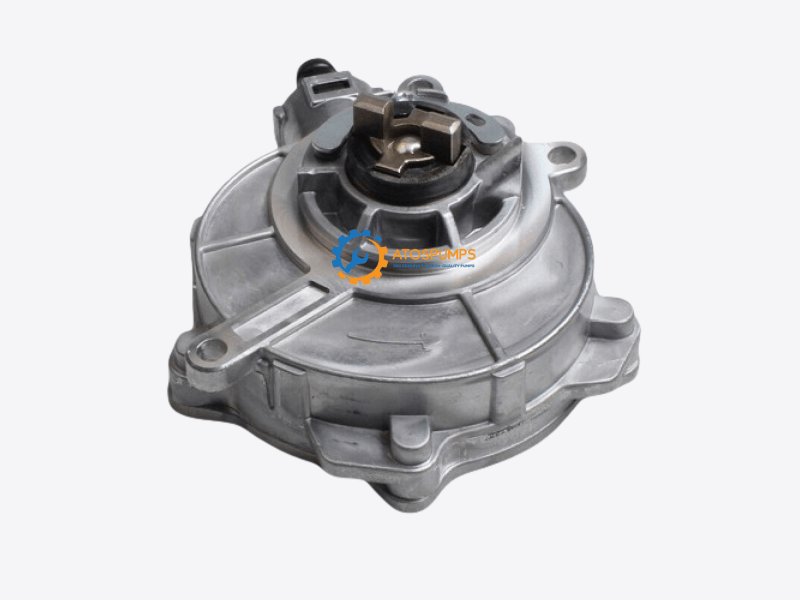
Automotive Vacuum Pump: Symptoms, Selection & OEM Guide for Dodge & Mercedes
The automotive vacuum pump powers the brake booster and, on many turbo-diesel and some gasoline models, the crankcase ventilation system. If you service Dodge pickups or Mercedes vans, a weak vacuum pump is a safety issue, not just a nuisance. This guide covers failure symptoms, selection criteria, and OEM cross-referencing so you can source the correct pump quickly and confidently.
What the Vacuum Pump Does
Many modern engines no longer generate enough manifold vacuum at idle, so a mechanical or electric vacuum pump supplies it. When output drops below spec, the brake pedal feels hard, assist fades, and warning lights appear. For vans used in delivery and passenger service, that is a direct safety risk.
Failure Symptoms to Watch
- Hard or stiff brake pedal, especially at low RPM
- Brake warning light or ABS-related codes
- Hissing noise near the pump or firewall
- Oil weep from the pump seal (mechanical units)
- Reduced braking assist after a cold start
Key Parameters to Verify
| Parameter | Why it matters | What to check |
|---|---|---|
| Mounting & drive type | Must fit the engine | Cam-driven vs. electric; flange & bolt pattern |
| Vacuum output (kPa/bar) | Matches booster demand | Compare to OE spec at idle |
| Port & connector | Seals the system | Line size, electrical plug (electric units) |
| Seal & material grade | Service life | Oil-resistant seal, validated diaphragm |
| OEM part number | Guarantees fitment | Cross-check by VIN / engine code |
OEM Cross-Reference: Dodge & Mercedes
Workshops routinely see multiple revisions across model years. Build a cross-reference from the original equipment number to a verified equivalent, then confirm the mounting face and (for electric units) the connector. Our automotive vacuum pump product page includes fitment notes and the cross-reference list for common Dodge and Mercedes applications.
Selection Checklist
- Identify the engine and model year from the VIN.
- Confirm whether the unit is mechanical (cam-driven) or electric.
- Match the OEM number — do not rely on visual similarity.
- Verify vacuum output and port/connector type.
- Replace the sealing components during install to avoid repeat failures.
Why Low Maintenance Matters for Fleets
For vans and pickups in daily service, a pump with a low failure rate directly reduces downtime and roadside risk. Choosing a unit with validated seals and a documented test procedure at the supplier means fewer comebacks and predictable maintenance scheduling.
E-E-A-T: Sourcing From a Validated Supplier
Atos Pumps builds to ISO 9001-controlled processes, with export experience across the Americas and material traceability per batch. Technical support verifies fitment before shipment, helping workshops avoid wrong-part returns and unsafe installs.
FAQ
Can I drive with a failing vacuum pump?
Not safely. Reduced brake assist increases stopping distance. Inspect and replace promptly.
Mechanical or electric — how do I tell?
Check the engine layout: cam-driven units sit on the cylinder head; electric units are mounted remotely with a wiring plug. The VIN confirms it.
Do I need to bleed the system after replacement?
Mechanical units need no bleed; electric units require reconnecting the harness and clearing any stored codes with a scan tool.
Order the Correct Vacuum Pump
Send us your OEM number for a same-day cross-reference and quote, or view our automotive vacuum pump range. We support workshop and distributor volumes across North, Central and South America.