
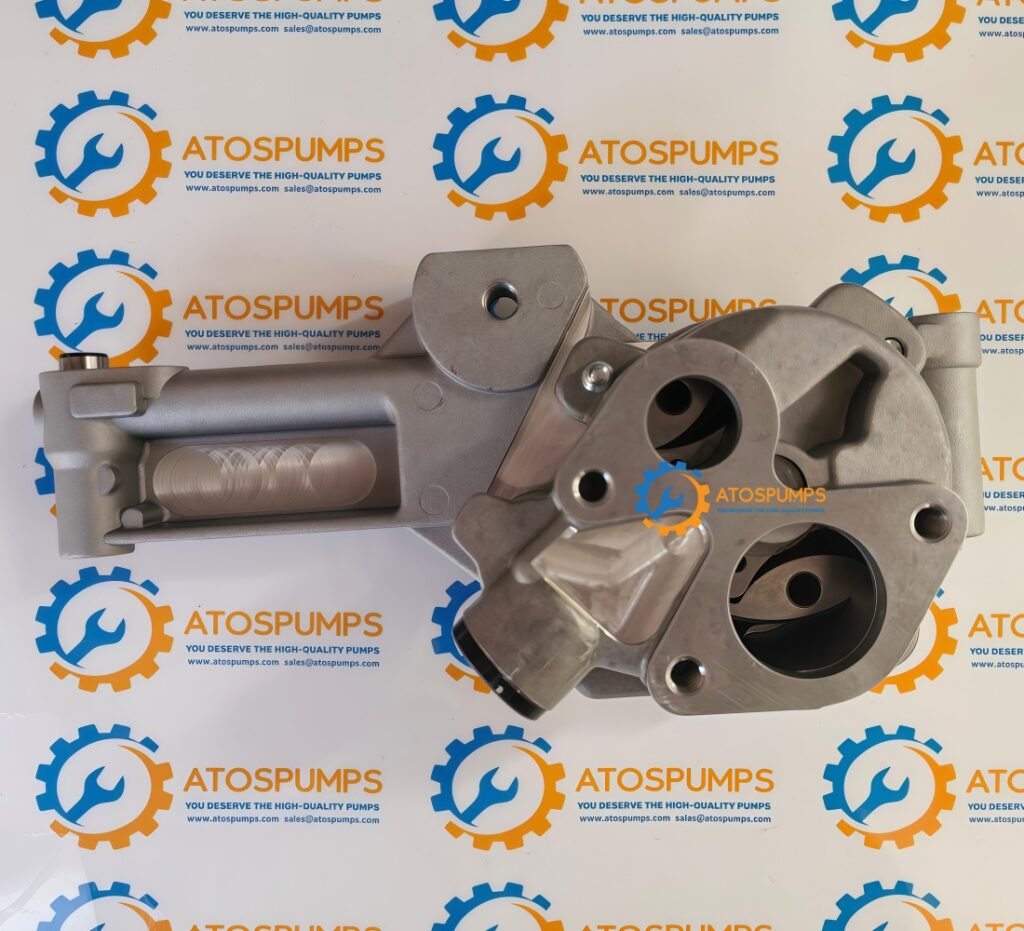

When your worksite depends on excavators, bulldozers, wheel loaders, and heavy trucks, every hydraulic failure becomes a costly bottleneck. At the heart of these machines lies the oil pump—a component that transforms raw engine power into controlled, repeatable force. Buying a substandard oil pump doesn’t just risk a breakdown; it compromises safety, fuel economy, and entire project timelines. After years of maintaining fleet equipment across mining and construction sites, here are four uncompromising tips to help you source qualified oil pumps for heavy machinery.
1. Prioritize Pump Type Based on Machine Duty Cycle
Not all oil pumps are engineered for the same workload. Heavy machinery operates under extreme pressure spikes, thermal shocks, and continuous vibration. Before you buy, identify whether your machine requires a gear pump, vane pump, or piston pump.
- Gear pumps are common in dump trucks and early-model wheel loaders. They tolerate contamination better but lose efficiency over time.
- Piston pumps dominate high-end excavators and bulldozers. They handle pressures above 4,000 psi and variable flow demands. If your machine performs precise grading or heavy lifting, never settle for a gear pump substitute.
- Vane pumps appear in medium-duty loaders but fail quickly under high-duty cycles.
Match the pump’s continuous pressure rating to your machine’s peak hydraulic demand. A qualified supplier will list both intermittent and continuous ratings. Many counterfeit pumps only show a single number—that is a clear warning sign. For bulldozers pushing dense clay or heavy trucks hauling uphill, always overspec the pump’s thermal capacity by at least 15%. This buffer prevents cavitation and oil degradation during summer operations.
2. Verify Material Authenticity and Casting Density
Visual inspection alone never reveals true quality, but certain physical markers separate qualified pumps from scrap. Begin with the housing material. Original heavy-duty pumps use high-grade cast iron (typically ASTM A48 Class 30 or higher) or ductile iron for the rear cover. Aluminum housings are lighter but deform under continuous load in machines above 150 horsepower.
Run a simple density check: qualified cast iron housings feel unusually heavy for their size. Knock on the housing with a metal wrench—a clear, bell-like ring suggests uniform casting; a dull thud indicates porosity, shrinkage, or micro-cracks. These defects cause internal leak paths that reduce volumetric efficiency by 20% or more within 400 operating hours.
Inspect the gear or piston surfaces. For gear pumps, hardened steel gears (55–60 HRC) resist abrasive wear from residual contaminants. Unqualified pumps use case-hardened or untreated gears that show galling after 200 hours. For piston pumps, examine the swashplate and cylinder block. They should have a ground, mirror-like finish without scoring. If you spot tooling marks or inconsistent anodizing, reject the unit immediately.
3. Demand Traceable Test Reports and Fitment Data
A qualified oil pump comes with proof—not promises. Before sending payment, request three specific documents:
- Dynamic test report showing flow rate (L/min or GPM) at 25%, 50%, and 100% rated pressure. The curve must be linear. Non-linear flow indicates internal bypass or spring fatigue.
- Dimensional certification of all mounting interfaces, including pilot bore concentricity and flange flatness. A deviation of just 0.05 mm causes misalignment, leading to premature shaft seal failure.
- Material certificate confirming casting batch and heat treatment lot numbers.
Do not accept generic “tested” stickers. Ask for the actual serial-numbered report that matches the pump you receive. Additionally, demand fitment verification. Many aftermarket pumps use “universal” inlet/outlet ports that differ from OEM clocking positions. Compare the port orientation, thread type (metric vs. BSP vs. NPT), and drive shaft spline count. On heavy trucks, the wrong pilot diameter can destroy a transmission-mounted pump within one shift. On excavators, a mismatched pilot pressure port will disable swing braking.
If the seller hesitates or says “we don’t keep those records,” walk away. Qualified manufacturers and specialized distributors maintain digital archives of every test.
4. Evaluate Supplier’s Application Experience and Warranty Structure
The best oil pump in the world fails if you choose the wrong seller. Avoid general parts platforms that sell pumps for lawn tractors and mining shovels from the same catalog. Instead, vet suppliers on two experience metrics:
- Years of heavy machinery specialization – ask how many pump replacements they have supplied for your exact model (e.g., Caterpillar 320D excavator, Komatsu D65 bulldozer, Volvo L120 loader). A qualified supplier rattles off common failure modes without hesitation—they know that wheel loaders need reinforced input shafts, and that heavy trucks require cold-start bypass valves.
- Warranty terms – a confident supplier offers at least 12 months or 2,000 hours, whichever comes first. Read the exclusions. Legitimate warranties cover manufacturing defects (porosity, seal leakage, gear fracture). Unqualified warranties exclude “wear items” like bearings and seals—essentially every moving part. Also check the return process. Some offshore sellers offer “lifetime warranty” but charge 60% restocking fees and require shipping to another continent, making claims worthless.
Finally, ask for references from local heavy equipment repair shops. Mechanics know which pumps arrive with correct pilot holes and which need filing. They also know which brands maintain consistent hardness across batches. A single conversation with an independent hydraulic repair technician often reveals more than ten hours of online searching.
Final Thoughts
Buying a qualified oil pump for excavators, bulldozers, wheel loaders, or heavy trucks is not about finding the lowest price—it is about matching engineering reality to your operating environment. Focus on pump type and duty cycle, verify casting density and material hardness, demand traceable test reports, and choose a supplier with proven heavy machinery experience. These four steps will not eliminate all risks, but they will remove 90% of premature failures. In an industry where downtime costs $500 per hour or more, that return on diligence is incalculable.