
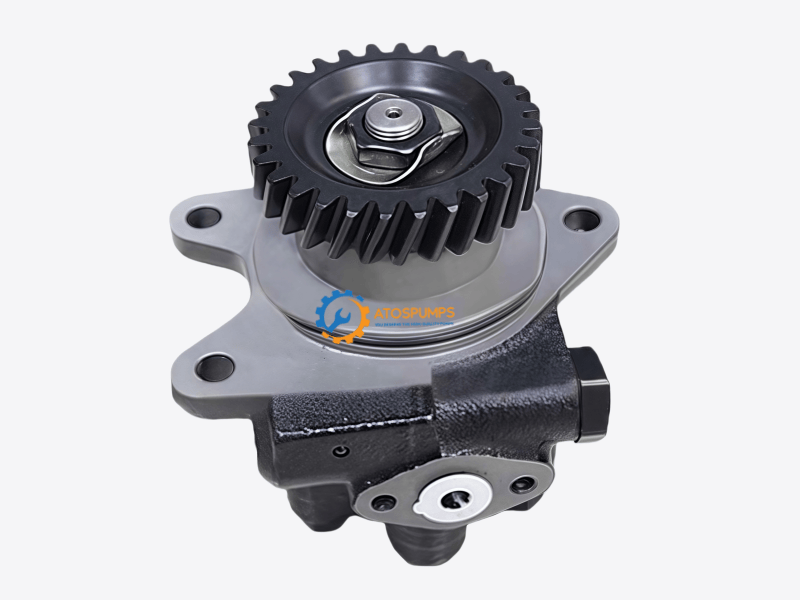
A failing power steering pump rarely fails all at once. It usually warns you first – a whine on cold start, a heavier wheel at low speed, a damp spot on the hose. Catching power steering pump problems early protects the steering rack, which is far more expensive to replace. This guide covers the symptoms buyers and mechanics see most, what causes them, how to diagnose, and when a durable replacement is the right call.

Common Power Steering Pump Problems
Most failures show up as one of five patterns. Learn to recognize them and you can often fix the cheap cause before it ruins the pump.
1. Whining or Groaning Noise
The classic symptom. A high-pitched whine that rises with engine RPM usually means the pump is starving for fluid or drawing air. Low fluid, a clogged inlet screen, a collapsing suction hose, or a worn bearing all produce this sound. Air in the system also foams the fluid, which cuts pressure and accelerates wear.
2. Stiff or Heavy Steering
If the wheel gets hard to turn at parking speeds or after the engine warms up, pressure is dropping. Causes include a worn pump internals (vanes or rotor), a slipping belt, or internal leakage in the steering gear. On trucks this is dangerous – it builds driver fatigue and slows emergency maneuvers.
3. Steering Wobble and Foamy Fluid
Air trapped in the loop makes the wheel feel light one moment and heavy the next. Check the reservoir: if the fluid looks like coffee with cream and bubbles, you have aeration. Trace every suction line and the reservoir seal before blaming the pump.
4. Leaks and Low Fluid
Power steering fluid on the ground under the pump, or a steady drop in the reservoir, points to a seal or O-ring failure. High-pressure lines leak at the crimp; the pump itself leaks where the shaft seal gives out. Ignore it and the pump runs dry – which destroys it within minutes.
5. Overheating and Seizure
On continuous-duty trucks and buses, a pump that runs hot scores its own surfaces. Once metal transfers inside the housing, pressure collapses and the unit can seize, taking the belt and alternator with it. Heat is the enemy of pump life.
What Causes These Failures
Behind the symptoms sit a short list of root causes:
- Contaminated or wrong fluid – using ATF where the spec calls for PS fluid (or vice versa) breaks down seals.
- Deferred fluid changes – old fluid carries abrasive particles that lap the pump’s tight clearances.
- Belt and tensioner neglect – a slipping belt robs the pump of speed and pressure.
- Poor-quality replacements – soft seals and untreated shafts corrode fast in under-hood heat.
- Misalignment at install – forcing a pump onto a bad flange cracks the housing and invites leaks.
How to Diagnose Step by Step
- Check fluid level and condition. Top up with the correct spec; note color and bubbles.
- Inspect the belt and tensioner; a glazed or loose belt is an easy fix that mimics pump failure.
- Look for leaks at the pump shaft, hose crimps, and reservoir.
- With the front lifted safely, turn the wheel lock-to-lock and listen; aerate the system if needed to purge air.
- If noise and pressure loss remain after fluid, belt, and air are corrected, the pump internals are worn and replacement is due.
Fixes and When to Replace
Many bad power steering pump symptoms are solved without a new pump: a fluid flush, a belt, a suction hose, or a reservoir seal can restore quiet operation. But once the pump’s internal vanes or shaft seal have worn, no additive or bleed will bring it back. Replace when pressure testing confirms the pump cannot hold spec, or when metal debris appears in the fluid.
Preventive Maintenance Checklist
| Interval | Action |
|---|---|
| Every oil change | Check fluid level, color, and smell; top up with correct spec. |
| Annually | Inspect belt, tensioner, and all PS hoses for cracks or swelling. |
| Every 2-3 years | Flush the system to remove abrasive debris. |
| At pump swap | Replace inlet hose and flush the rack to protect the new unit. |
Choosing a Replacement That Lasts
When replacement is the answer, the goal is a unit that does not come back. ATOSPUMPS power steering pumps are built with three things in mind for exactly this scenario:
- Durable internal components that hold pressure across the pump’s service life.
- Corrosion-resistant materials for harsh under-hood heat, moisture, and road salt.
- Direct-fit design for quick, hassle-free installation with no fabrication.
Produced under an ISO 9001 system, these pumps cover a wide fitment range – from Daewoo, Honda, and Mazda cars to Cummins-powered trucks and Massey Ferguson tractors. For a proven Cummins-compatible replacement such as the 4937729 pump, confirm your OE number and we will match the rotation, flange, and pressure before you order. Browse the full truck and car power steering pump range to pre-qualify the right unit for your fleet.
How Fluid Choice Affects Pump Life
Fluid is not interchangeable. Using automatic transmission fluid where the manufacturer specifies power steering fluid (or the reverse) changes viscosity and seal compatibility, leading to swelling, leaks, and accelerated wear. In hot-climate markets – Gulf, North Africa, and Latin America – fluid also breaks down faster, so shorter change intervals protect the pump. When you replace a unit, flush the old fluid rather than topping up; leftover debris immediately attacks the new pump’s tight clearances.
Belt, Pulley, and Tensioner Inspection
A large share of “pump failures” are really belt problems. A glazed, cracked, or loose belt slips under load, dropping pump speed and pressure exactly when the driver needs it most – low-speed parking or a hard turn. Inspect the tensioner for slack and the pulley for wobble or a bad bearing. Replace the belt together with the pump if it shows wear; a failing belt will soon take the new pump’s pulley with it and cost you a repeat job.
Quality and Warranty Considerations When Replacing
Price per unit matters less than total cost of ownership. A cheap pump that fails in six months costs a second job, a lost customer, and a warranty claim. Look for documented manufacturing controls, corrosion-resistant materials, and a direct-fit guarantee so installation time stays low. For fleets and workshops, standardize on a single trusted line so every replacement is the same known quantity. ATOSPUMPS builds to this standard under ISO 9001, with durable internals and direct-fit geometry across car, truck, and tractor applications.
Frequently Asked Questions
What are the first signs of a bad power steering pump?
A whining noise that changes with RPM, heavier steering at low speed, and low or foamy fluid are the earliest signs. Catching them early often means a cheap fix rather than a full replacement.
Can I drive with a failing power steering pump?
Not safely for long. As pressure drops, steering effort rises and can fail completely at the worst moment. On trucks this also risks belt and alternator damage. Repair or replace promptly.
Why does my pump whine after replacement?
Usually trapped air or a loose suction line drawing air, or the wrong fluid spec. Bleed the system and verify every inlet connection is sealed before assuming the new pump is faulty.
How long should a quality power steering pump last?
A well-matched, ISO 9001-built direct-fit pump on a properly maintained system typically serves the vehicle for many years. Life shortens sharply with neglected fluid, misalignment, or contaminated fluid.
How much does a power steering pump replacement cost?
The part is usually a modest share of the total. The real cost is labor, fluid, and downtime – and a second job if the first pump fails. Choosing a durable, direct-fit unit with confirmed fitment avoids the repeat visit, which is where the savings actually show up for shops and fleets.
Get a Quote
Need the right replacement for your fleet or shop? Request a Quote with your vehicle list and OE numbers, or email sales@atospumps.com. Our team confirms fitment and lead time so your pump arrives ready to install.