
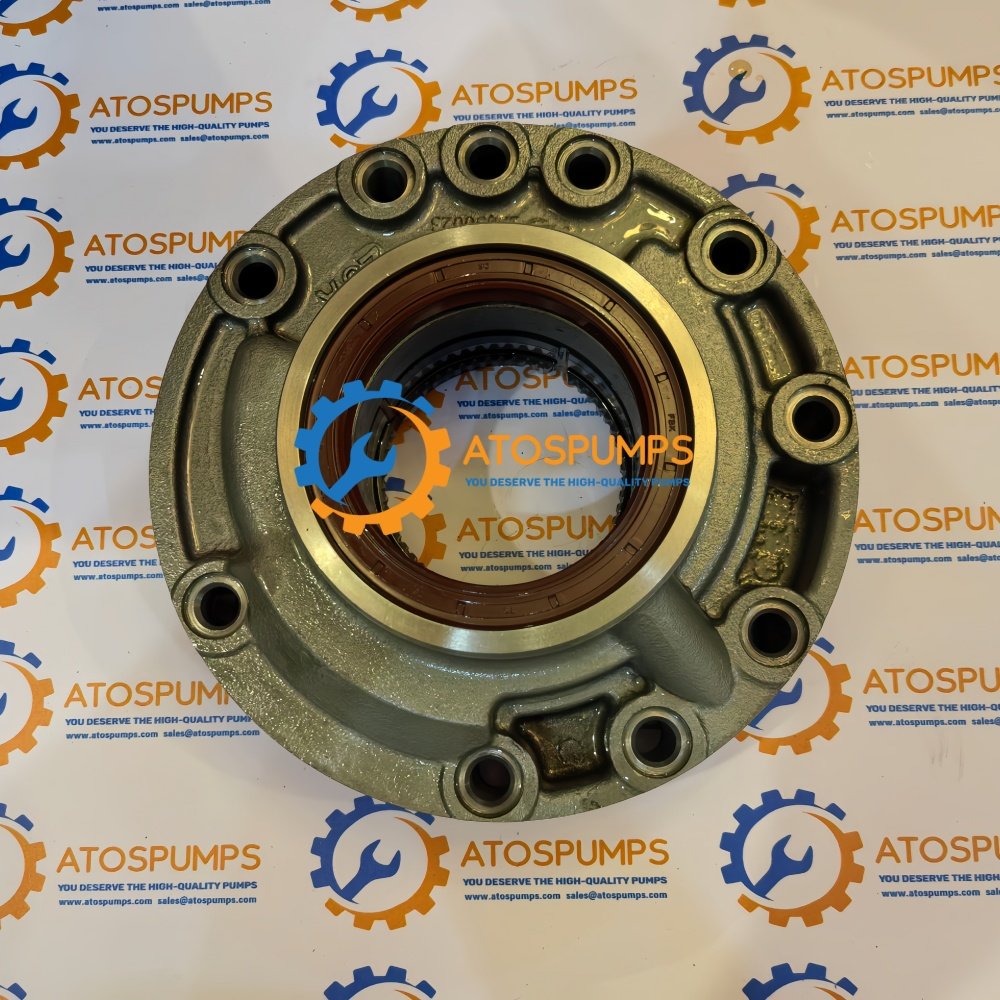

The transmission pump is the beating heart of every powershift system, torque converter circuit, and hydrostatic drive in heavy equipment. Whether you operate a CATERPILLAR wheel loader moving aggregate, a CASE backhoe digging footings, a JOHN DEERE tractor ploughing fields, or a TECM forklift stacking pallets, the instant your transmission pump degrades, the machine becomes a liability. Unlike a simple hydraulic gear pump, a transmission pump must supply precise charge pressure, feed clutch packs, lubricate planetary gears, and often provide steering and brake assistance. Failure leads to burnt friction plates, overheating, and repair costs that erase months of profit. Maintenance is not optional; it is a discipline. Here is how to preserve your transmission pump across every brand in your fleet, from KOMATSU to PETTIBONE, and ensure you never accept a substandard replacement.
1. Obsess over fluid cleanliness and specification
A transmission pump operates with internal clearances measured in microns. Contaminated fluid acts as a grinding paste. For a CATERPILLAR wheel loader or DANA Spicer powershift transmission, you must use exactly the oil recommended by the manufacturer, never a generic “universal” tractor fluid mistaken for a savings. CATERPILLAR systems demand TO‑4 specification oil; ZF gearboxes rely on specific ZF Lifeguard fluids to preserve seal chemistry and friction stability. JOHN DEERE tractors require Hy‑Gard or low‑viscosity Hy‑Gard depending on ambient temperature. Drain intervals must be enforced strictly, because degraded additives shear under the high pressure inside the pump, causing boundary lubrication collapse. When servicing any backhoe loader—be it a TEREX, VOLVO, NEW HOLLAND, or CARRARO unit—always clean the filler cap area thoroughly before opening. One grain of sand entering the reservoir can score the pump’s pressure plates and start a cascade of erosion that no filter can reverse.
2. Make filtration your first line of defence
A transmission pump does not just push oil; it constantly recirculates wear debris. Change the full‑flow transmission filter and clean the suction strainer at the intervals dictated by the equipment’s hour meter, never just by calendar months. On a JCB backhoe or a PETTIBONE rough‑terrain handler working in dusty environments, the suction screen inside the transmission sump is the primary trap for fibrous debris and carbon particles. If that screen becomes restricted, the pump starves, cavitation begins, and the impellor or gear set erodes within minutes. For DANA Spicer transmissions, examine the magnetic drain plug at every oil change. A fine grey sludge on the magnet is normal; bronze‑coloured flakes or silver splinters indicate pump gear distress and require immediate investigation. Never fit a filter from an unknown source; a qualitied replacement filter with the correct bypass pressure and media rating ensures that the pump’s delicate charge circuit is never exposed to un‑filtered cold‑start oil.
3. Keep operating temperature strictly in check
Heat is the transmission pump’s silent executioner. A ZF gearbox in a demanding application, or a torque converter transmission in a KOMATSU wheel loader, can push oil temperatures above 120 degrees Celsius if the oil‑to‑water heat exchanger becomes fouled. At such temperatures, oxidation accelerates and the pump’s internal clearances collapse, leading to metal‑to‑metal contact. For forklifts—including those from NISSAN, TOYOTA, and TECM—that frequently work inside tight warehouses, debris packing around the transmission cooler fins is a common root cause of pump failure. Check and clean the cooler cores with compressed air at every major service. If your machine lacks a temperature gauge, install an aftermarket monitoring kit on the transmission charge line. A pump that runs 15 degrees hotter than specification will lose half its expected service life. This applies equally to a CARRARO powershift axle and a VOLVO backhoe loader’s shuttle transmission.
4. Eliminate air ingestion and cavitation before they start
Cavitation is not a gradual wear process; it is explosive erosion that pits the pump’s gerotor, vane, or gear surfaces and sends hardened metal fragments through the entire hydraulic circuit. Air can enter through a cracked suction hose, a dried‑out O‑ring on the inlet flange, or a low fluid level that uncovers the intake during slope operation. On NEW HOLLAND and CASE backhoe loaders, the short suction hose between the transmission sump and the charge pump often perishes due to heat cycling and chafing against the chassis. Inspect that hose for soft spots and micro‑cracks every 500 hours. For DANA Spicer transmissions with remote spin‑on filters, verify that the filter head seal is not allowing the pump to draw air during shutdown, leading to dry starts. A qualitied transmission pump is built to move liquid, not compressible fluid. Any trace of foaming on the dipstick signals an urgent need to seal the suction side.
5. Validate charge pressure regularly with diagnostics
You cannot maintain what you do not measure. Every transmission pump for a CATERPILLAR wheel loader, JOHN DEERE tractor, or ZF gearbox has a specified charge pressure that must be tested at idle and high idle, with the oil at operating temperature. A drop of more than 10 percent from the baseline usually points to internal pump wear, a sticking regulator valve, or an internal leak that bypasses oil directly back to the sump. Use a calibrated gauge screwed into the proper test port, never guess. For a KOMATSU forklift or a PETTIBONE telehandler with a dedicated pump for the transmission and torque converter, also measure the converter inlet pressure. If the pump cannot maintain pressure under load, the clutches will slip, the converter will overheat, and the pump itself will degrade further. Recording these pressures monthly gives you a trend line that predicts failure long before a roadside breakdown. When the trend cannot be corrected with external adjustments, it is time to source a replacement that meets the exact volumetric displacement and tolerances of the original unit.
6. Protect the pump during idle periods and storage
Many transmission pump failures originate not during work, but during inactivity. Machines parked for seasonal use—such as farm tractors or TEREX construction plant—suffer from condensation inside the gearbox. That moisture attacks the precisely finished pump surfaces and creates corrosion pits that turn into fatigue spallings once operation resumes. Before storage, run the transmission long enough to reach full temperature, then change the oil and filter so the pump sits in fresh, moisture‑free fluid. Seal all breathers against humidity. For backhoe loaders from JCB and VOLVO, engage the transmission safety lockouts but also cycle the controls to refill clutch cavities with clean oil before shutting down. A pump that sits in contaminated, water‑laden oil for three months will fail within the first week of the new season.
Preserving your transmission pump across all these brands—CATERPILLAR, CASE, ZF, DANA Spicer, JOHN DEERE, KOMATSU, TECM, NISSAN, TOYOTA, and every variant in between—demands consistent attention to fluid quality, filtration, temperature, air exclusion, and pressure diagnostics. When maintenance can no longer rescue a worn pump, the replacement must be a qualitied unit engineered to the exact OEM specifications for your machine’s serial number and duty cycle. If you require a qualitied transmission pump or technical support for your fleet, send us your inquiry today. Our specialists are ready to match your machine with a pump that restores full charge pressure and durability.