
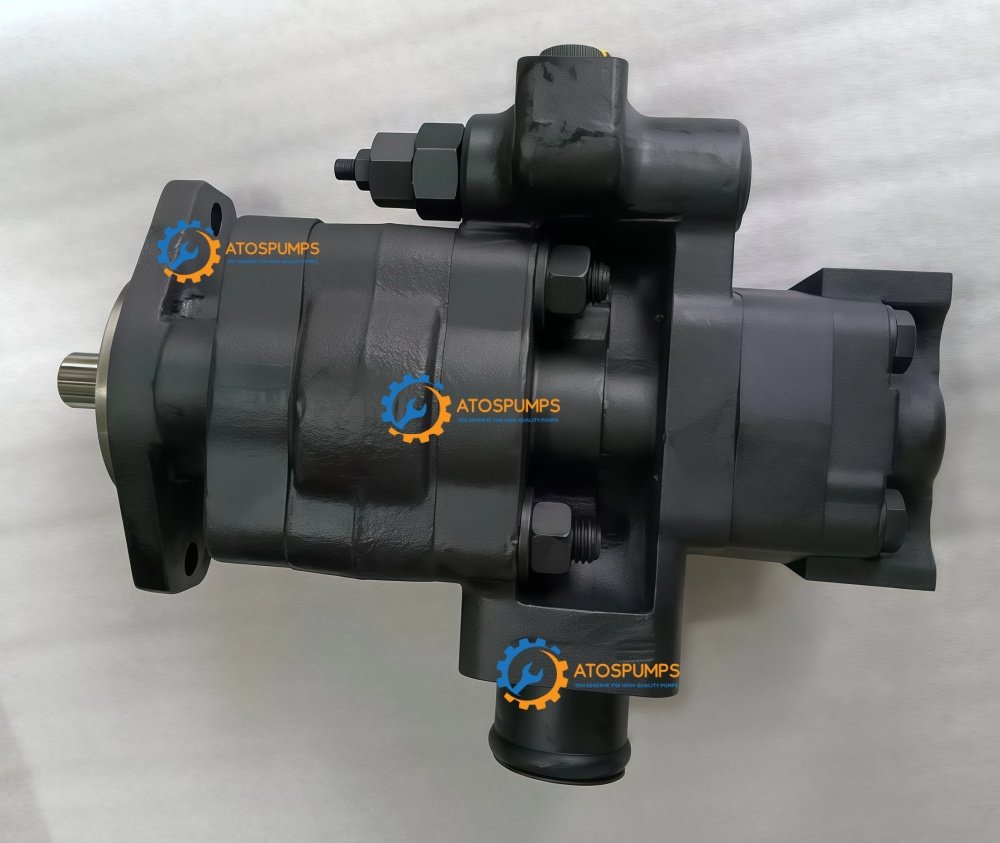

Introduction: Protect Your Investment, Maximize Uptime
A hydraulic pump is a precision asset, not a disposable commodity. Whether it’s powering a Komatsu wheel loader moving aggregate in a South African mine, a New Holland tractor harvesting in Brazil, or a Toyota forklift stacking goods in a Dubai warehouse, the pump’s lifespan directly dictates your operating costs. At ATOSPUMPS, we engineer our pumps to support heavy load lifting, pressing, and transfer with ease, but even the toughest pump requires disciplined care. This article, grounded in real-world experience, gives you a complete hydraulic pump maintenance protocol that prevents failures, cuts downtime, and protects your purchase. For fleet managers and maintenance supervisors handling mixed fleets of Komatsu bulldozers, JCB backhoe loaders, and Massey Ferguson tractors, these practices are non-negotiable.
The Hidden Cost of Ignoring Maintenance Schedules
When a hydraulic pump fails prematurely, the obvious cost is the replacement part. The far bigger loss is the ripple effect: contaminated oil circulating through the entire system, damaging valves, cylinders, and the new pump if the root cause isn’t fixed. I’ve seen operations where a single pump failure on a Komatsu excavator cascaded into a $15,000 repair bill because metal particles destroyed the main control valve. The problem often starts with neglect—skipping oil sampling, ignoring abnormal noise, or using the wrong filtration. ATOSPUMPS field support team has repeatedly observed that 80% of warranty claims trace back to contaminated fluid or improper hydraulic pump installation, not material defects. This is why we emphasize maintenance as strongly as we emphasize product quality.
A Step-by-Step Hydraulic Pump Maintenance Routine
1. Establish an Oil Cleanliness Baseline
Before installing a new hydraulic pump for sale from us, flush the entire system to ISO 4406 cleanliness code 18/16/13 or better. Use a high-efficiency filter cart. If you can’t flush, at minimum drain old oil, replace all filters, and refill with fresh, high-quality hydraulic oil of the manufacturer-recommended viscosity. ATOSPUMPS recommends an initial oil sample analysis to verify that no residual contaminants remain.
2. Daily Visual and Auditory Inspections
Train operators to look for leaks around the pump shaft seal and mounting flange. Listen for any change in pitch—cavitation sounds like a gravel-like noise, while aeration produces a whining sound. Catch these early, and you can often save the pump by correcting the suction line restriction or fluid level before internal erosion occurs.
3. Scheduled Filter and Fluid Changes
Do not rely solely on bypass indicators. Replace return and pressure filters at intervals dictated by oil analysis, not just hours. On heavy-duty applications like Komatsu bulldozers pushing abrasive overburden, change filters at half the OEM interval if oil samples show elevated silicon or iron levels. We recommend a full fluid change and system flush every 2000 operating hours or annually, whichever comes first, particularly for pumps with hardened, wear-resistant components that you want to protect long-term.
4. Monitoring Case Drain Flow
For piston pumps, a case drain flow test is the most revealing health check. Connect a flow meter to the case drain line and measure leakage at normal operating temperature and full pressure. Compare to the pump’s specifications. A gradual increase indicates normal wear, but a sudden jump signals damage. ATOSPUMPS provides allowable case drain flow limits in the technical datasheet delivered with every pump.
5. Regularly Check and Torque Mounting Hardware
Vibration can loosen pump mounting bolts and coupling connections. Include a torque check of mounting and flange bolts in your preventive maintenance checklist. A loose pump can cause misalignment that kills the shaft bearing in weeks.
Technical Insight: How Our Pump Design Simplifies Maintenance
Because ATOSPUMPS hydraulic pumps feature precision-machined internals guaranteeing tight volumetric efficiency, they maintain stable case leakage over time. This predictability makes trend monitoring highly effective. The hardened cylinder block and valve plate resist the abrasive wear that causes efficiency to drop, meaning your oil analysis data will reflect a gradual, manageable wear pattern instead of catastrophic spikes. Furthermore, we design our seal configurations to be field-replaceable without complete disassembly of the rotating group on many models—a boon for maintenance crews working on Komatsu trucks or JCB backhoes in remote locations.
Correct Hydraulic Pump Installation as the Foundation of Long Life
Maintenance begins with correct installation. In our dedicated hydraulic pump installation guide (see next blog), we detail the steps, but the maintenance angle is this: never start a new pump with dirty oil, never restrict the suction line, and always pre-fill the pump housing with clean oil before start-up. After installation, run the pump at zero pressure for several minutes to purge air, then gradually bring it to operating pressure while monitoring temperature and noise. Document these baseline readings. If your team follows this, the pump will deliver years of service even under heavy load lifting cycles.
Common Maintenance Mistakes That Void Warranty
One frequent error is mixing oil types. Adding hydraulic oil with a different additive package can cause foaming and chemical incompatibility, damaging internal surfaces. Another is ignoring the breather cap on the hydraulic tank. A clogged breather creates a vacuum in the tank, starving the pump inlet and causing cavitation—a pump killer. ATOSPUMPS strongly recommends installing a desiccant breather on tanks operating in humid environments like those found in Colombia or coastal Oman.
When to Replace vs. Rebuild: A Practical Decision Guide
A pump that has experienced catastrophic metal-to-metal contact is usually not an economical rebuild candidate. If your oil sample shows high chromium and iron, and the pump sounds like a rock crusher, replacement with a new ATOSPUMPS unit is the safest route. For pumps with normal wear, we can supply seal kits and rotating groups for authorized rebuilders, but always weigh the cost of labor, downtime, and the risk of residual contamination against the price of a new, fully tested pump carrying full warranty. Given our competitive pricing on hydraulic pump for sale, many fleet managers find outright replacement delivers better total cost of ownership.
Trust and Global Support for Your Maintenance Program
ATOSPUMPS doesn’t just ship a box. We support your maintenance program with technical bulletins, oil analysis guidelines, and direct access to our application engineers. Our ISO 9001-certified process ensures consistency, and every pump comes with a detailed maintenance manual. Whether you maintain a fleet of John Deere backhoe loaders in Mexico or Komatsu excavators in Peru, we will help you set up a maintenance regimen that keeps your machines earning.
Upgrade Your Maintenance Practices Now
Don’t wait for a pump to scream before you act. Contact us now to check our hydraulic pumps which you are looking for and request the full maintenance datasheet for your specific model. Start a live chat on our website to discuss your fleet’s maintenance challenges, or message us on WhatsApp for bulk spare parts and pump inquiries. Subscribe to our weekly blog updates to receive more hands-on maintenance guides. Protect your equipment—reach out to ATOSPUMPS today.