

The Silent Killer of Heavy Equipment Profitability
Every minute a REXROTH excavator sits idle on a Saudi Arabian construction site, or a KUBOTA tractor loses pressure on a Brazilian farm, your operational costs climb. Hydraulic systems are the muscle behind your fleet, and at the heart of that muscle lies the hydraulic pump. When it falters, everything stops. Yet, too often, maintenance teams replace a pump assembly before truly understanding the failure. This guide will walk you through systematic hydraulic pump troubleshooting, helping you save money, reduce downtime, and make informed sourcing decisions.
Problem Statement: Symptom Confusion Leads to Unnecessary Replacements
We hear it from procurement directors and fleet managers across the UAE, South Africa, and Chile: “The pump is noisy, so it must be shot.” But is it? Cavitation, aeration, internal leakage, or a simple relief valve issue can mimic catastrophic failure. Misdiagnosis costs thousands in unnecessary industrial hydraulic pump replacements and even more in lost productivity. The real problem is a lack of structured diagnostic knowledge at the maintenance level.
Solution: A 4-Step Diagnostic Framework That Saves Money
Before you send another inquiry for a new hydraulic pump assembly, apply this four-step troubleshooting protocol. It’s the same method ATOSPUMPS engineers use when supporting global clients.
Step 1: Listen and Categorize the Noise
A whining or screaming pump usually indicates cavitation—air bubbles collapsing violently inside the fluid. A rhythmic knocking might point to a contaminated or failing bearing. A quiet pump that still underperforms could be suffering from internal bypassing. Distinguishing these sounds prevents unnecessary teardowns.
Step 2: Check the Easy Culprits First
Low reservoir oil level, a clogged suction strainer, or a collapsed inlet hose are classic causes of cavitation. Verify hydraulic fluid condition—milky oil indicates water contamination; burnt smell means thermal breakdown. These issues kill hydraulic pump efficiency long before mechanical wear does.
Step 3: Pressure and Flow Verification
Connect a flow meter and pressure gauge to the pump outlet. Compare readings against the manufacturer’s specifications. A healthy industrial hydraulic pump should deliver consistent flow at rated pressure without excessive heat buildup. If flow drops dramatically as pressure rises, you have excessive internal wear.
Step 4: System Back-Pressure Isolation
Sometimes the problem isn’t the pump but a downstream valve sticking partially closed, creating abnormal resistance. Isolate the pump by directing its output directly to a tested relief valve and tank. If performance normalizes, the fault lies in the control circuit—not the hydraulic pump assembly.
Technical Deep-Dive: Understanding Failure Modes
A hydraulic pump converts mechanical power into hydraulic energy with high efficiency. When that efficiency drops, it’s due to one of three primary failure modes:
- Fatigue Wear: Cyclic loading erodes wear plates and vanes over years of service.
- Contamination: Solid particles score precision surfaces, causing internal leakage that generates high-pressure output but low net flow.
- Cavitation Erosion: Vapor bubbles implode with enough force to pit steel, destroying the smooth, consistent flow the system needs.
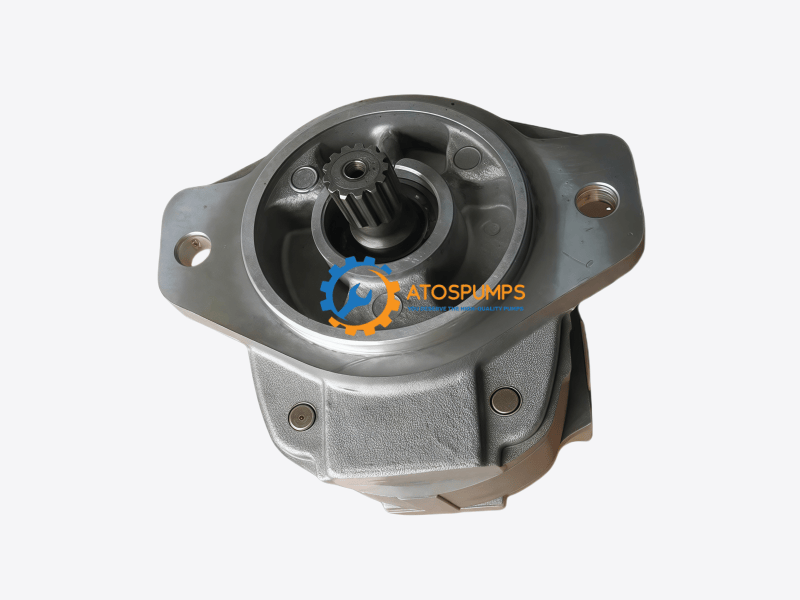
ATOSPUMPS builds every hydraulic pump assembly to withstand these stressors far longer, using hardened alloy steels and precision grinding, but even the best pump cannot survive systemic contamination or misapplication.
Global Trust Signals: Why ATOSPUMPS Becomes Your Diagnostic Partner
We don’t just sell pumps. We help you stop recurring failures. All ATOSPUMPS units are CE and ISO 9001 certified, manufactured in a facility that adheres to strict quality control protocols. Our global supply chain supports rapid delivery to demanding markets—whether you are an operations manager in Oman managing a fleet of KOMATSU trucks or a buyer in Peru overseeing NEW HOLLAND agricultural tractors.
Case Snapshot: Mexican Agricultural Consortium
A large farming group running over 50 MASSEY FERGUSON tractors experienced repeated pump failures in two units. Their local technician condemned the pumps. Before ordering replacements, our support team walked them through a hydraulic pump troubleshooting video call. The real issue? A restricted filter housing ingesting air through a cracked O-ring. Two $15 seals fixed a problem they were about to spend $1,800 on. That’s the value of expertise.
Compatibility You Can Rely On
Our hot-selling hydraulic pumps are trusted replacements for machines across the world, including:
- REXROTH excavators
- NACHI and KAWASAKI excavators
- KUBOTA and NEW HOLLAND tractors
- MASSEY FERGUSON agricultural equipment
- MITSUBISHI forklifts
- KOMATSU trucks
Every pump delivers high-pressure output for demanding industrial and mobile applications, ensuring your equipment returns to full productivity immediately.
Diagnose Before You Buy, Then Buy Right
Don’t let an easily diagnosable issue force you into weeks of downtime. If you’ve gone through this guide and still need a replacement hydraulic pump, we’re ready. Contact ATOSPUMPS now to check the hydraulic pumps you are looking for. Reach our technical sales team directly via WhatsApp or email for bulk order prices and immediate availability. Alternatively, send an online inquiry for a quotation and we’ll respond within hours. Your fleet deserves the reliability that comes from genuine expertise.
Contact us now to check our hydraulic pumps which you are looking for.