
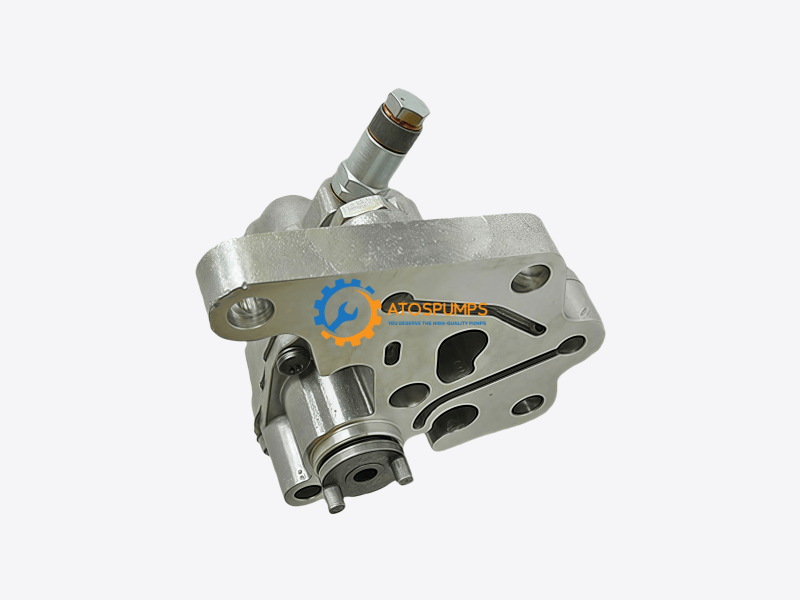

A fuel pump is far more than a simple delivery component. It is the precision gatekeeper that meters fuel to high-pressure common-rail injectors, sustains precise air-fuel ratios under boost, and prevents catastrophic lean-out failures. Whether you are restoring a BMW 5 Series, running a MACK truck across interstate highways, operating a CATERPILLAR excavator on a demolition site, maintaining a VOLVO wheel loader in a quarry, or servicing a farm CATERPILLAR tractor, a failing fuel pump can leave you stranded or, worse, destroy an engine through lean detonation or injector starvation. Yet the aftermarket is flooded with pumps that look identical on the outside but perform nothing like the original. Buying a truly qualified fuel pump demands that you look past price tags and catalogue fitments. Here are four original, in-depth tips to ensure your next fuel pump purchase matches the quality your machine deserves.
1. Decode the Fuel System Architecture Before You Even Browse
Fuel pumps are not interchangeable simply because they bolt on. Modern vehicles and equipment use fundamentally different fuel delivery strategies, each demanding a pump with a specific internal design and control logic. A BUICK sedan with a direct-injection petrol engine requires a high-pressure pump driven by the camshaft, capable of generating well over 100 bar, with a precisely controlled fuel volume solenoid. An AUDI TDI engine relies on a tandem pump that combines vacuum and fuel delivery in one housing. A FORD Power Stroke diesel truck uses a high-pressure pump fed by a lift pump, with strict flow requirements to maintain rail pressure under load. In heavy equipment, the split is even more pronounced. A CATERPILLAR excavator with a common-rail DEUTZ engine may employ an electronically governed high-pressure pump with integrated fuel temperature and pressure sensors, while a MACK truck might use a mechanical unit pump system where the injection pump is integrated into each cylinder. A SCANIA or VOLVO truck with an XPI fuel system demands a pump capable of delivering fuel at pressures exceeding 2400 bar, with internal clearances that can handle low-lubricity fuels. Even a vintage ISUZU pick-up may use a simple rotary injection pump that relies on fuel viscosity for internal lubrication. Before purchasing, write down not just the engine model but the pump’s OEM part number, the required rail pressure at peak torque, and the fuel type it was calibrated for. This specificity immediately filters out generic pumps that claim to fit everything. A supplier who asks for your engine serial number and confirms the pump’s flow curve against factory data is demonstrating the engineering depth you need.
2. Demand Precision Internal Components Over Generic Castings
The life of a fuel pump is dictated by the materials inside its housing. Cam rings, plungers, delivery valves, and drive couplings operate under immense mechanical stress and in continuous contact with fuel that may contain abrasive micro-particles. A quality pump for a MERCEDES BENZ diesel car or a DODGE Ram heavy-duty truck uses heat-treated alloy steel plungers with diamond-like carbon coatings to resist scuffing during cold starts when fuel viscosity is high. The cam ring profile must be ground on a precision CNC grinder and hardened to a depth that withstands millions of high-load cycles without flaking. Cheaper pumps substitute lower-grade sintered components that fatigue and spall, sending metal fragments through the injectors. For CATERPILLAR and DAF trucks, the fuel transfer pump integrated into the main injection pump must maintain a positive supply pressure to prevent cavitation. A worn transfer pump starves the high-pressure section, leading to erratic idle and low power. When evaluating a pump for a VOLVO wheel loader or a CATERPILLAR tractor, ask about the delivery valve seal material. Quality manufacturers use fluoroelastomer seals that resist swelling with modern biodiesel blends; generic nitrile seals harden and leak, causing hard starting and crankcase fuel dilution. Never accept a pump whose internal specifications are a mystery. If the seller cannot describe the plunger material, the hardening process, or the seal compound, the pump is a risk, not a solution.
3. Verify Real-World Flow and Pressure Stability, Not Just Bench Numbers
A fuel pump tested at room temperature on a calibration stand does not guarantee performance when the engine bay is heat-soaked after hours of operation. Diesel and gasoline pumps lose flow as fuel thins and internal clearances expand. A quality replacement pump must maintain its specified delivery rate at full-load engine speed and at the maximum fuel temperature the vehicle will experience. In a CATERPILLAR 336 excavator working under a summer sun, fuel in the tank can approach 50°C, and the pump must still hold rail pressure without internal leakage robbing flow. In a DAF truck hauling a full trailer up a grade, a momentary pressure dip can trigger limp mode. Ask for a pump that has been dynamically tested across its speed and load envelope, with a published volumetric efficiency figure. A reputable supplier of pumps for AUDI, BMW, and FORD vehicles will provide a test sheet showing delivery volume at cranking speed, idle, and rated power RPM, with backpressure applied to simulate a loaded injector circuit. For SCANIA and VOLVO trucks, check that the pump’s fuel metering valve response time matches the engine ECU’s demand. A sluggish valve causes rail pressure overshoot and undershoot, stressing the injectors and producing black smoke. The same principle applies to DEUTZ engines in agricultural and construction equipment: a pump with a slightly oversized plunger may over-fuel at idle, causing wet stacking and cylinder wash down. Insist on a pump with a calibration certificate traceable to an ISO test standard. That piece of paper is your assurance that the pump left the factory as a precision instrument, not an approximation.
4. Confirm Full System Compatibility and Supplier Support
A fuel pump never operates in isolation. It draws fuel through a filter, receives control signals from an ECU, and delivers fuel to a sensitive injection system. Even a high-quality pump can fail quickly if the surrounding system is neglected, and a trustworthy supplier will help you avoid that scenario. They will recommend that you replace the fuel filter and thoroughly flush the supply lines before installation. On a CATERPILLAR tractor or a MACK truck, residual debris from a failed previous pump can clog the new pump’s inlet screen within hours. A proper supplier will also advise on the correct grade of fuel for your specific BUICK or ISUZU vehicle, as some modern high-pressure pumps require a minimum lubricity additive that isn’t present in all regions. For heavy-duty applications, a supplier worth your money will provide installation torque values, the correct bleeding procedure, and a warning about common mistakes like using sealant on flare fittings. After the sale, they should be reachable for technical questions. When a DODGE Ram owner needs to verify the fuel pressure at the CP3 pump inlet, a quality supplier will talk them through the measurement rather than hide behind a warranty clause. This level of support turns a one-time transaction into a lasting partnership and ensures that the fuel pump you install today will protect your engine for years to come.
Buying a qualified fuel pump means piercing through marketing claims and demanding proof of architecture match, internal material integrity, dynamic test validation, and full system support. Whether your fleet includes BMW passenger cars, VOLVO wheel loaders, SCANIA trucks, or CATERPILLAR earthmovers, these four tips will guide you to a purchase that protects your engine and your uptime. For a fuel pump that meets these rigorous standards and comes backed by genuine technical expertise, send us your inquiry today. Our team is ready to match you with the exact quality fuel pump your machine demands.