
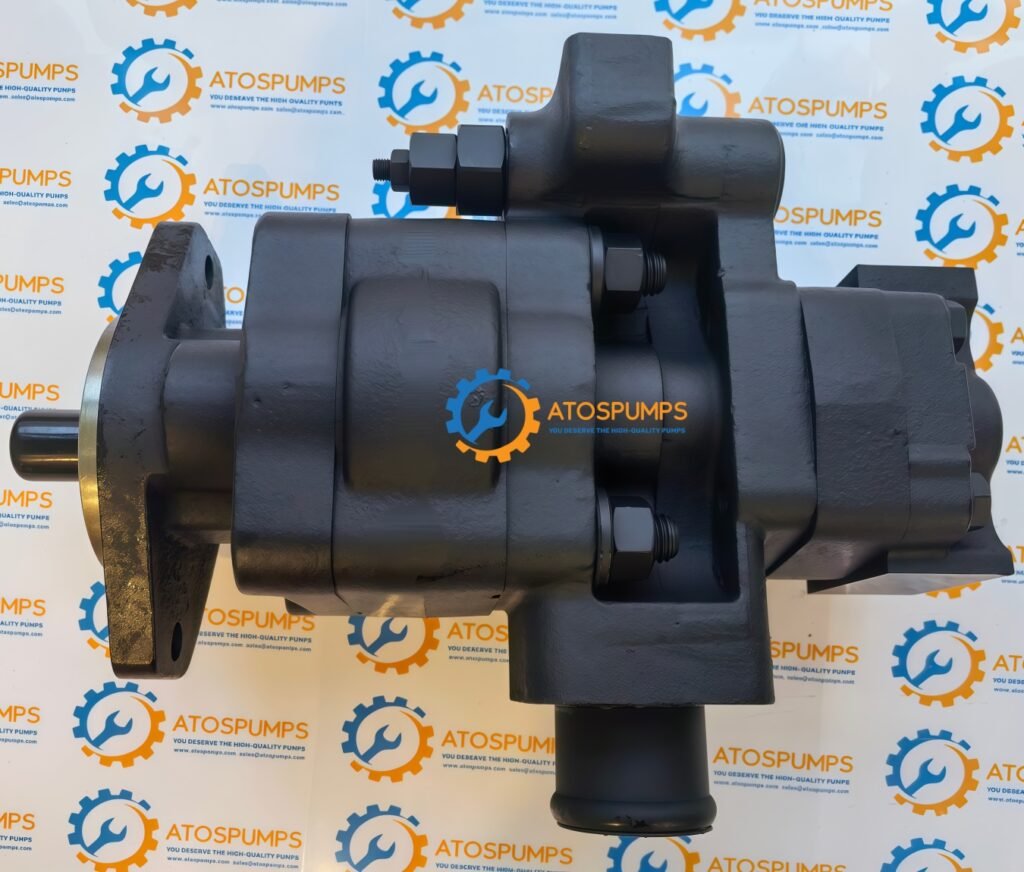

The hydraulic pump is the beating heart of any heavy machine. Whether you rely on a CASE backhoe loader for trenching, a KOMATSU excavator for demolition, a Massey Ferguson tractor for baling, or a Toyota forklift for warehouse stacking, every lift, curl, and drive function depends on a healthy pump. A failure doesn’t just stop work; it can introduce metallic debris into the entire system, turning a simple repair into a multi-component disaster. Knowing how to separate a genuinely robust pump from a poorly made copy is the most valuable skill an owner or fleet manager can cultivate. Here are four original, in-depth tips to ensure your next hydraulic pump is a long-term asset, not a hidden liability.
1. Match the exact pump architecture to the machine’s duty cycle
Not all hydraulic pumps create pressure the same way. Gear pumps dominate on agricultural tractors like a Ford 6610 or a Kubota M-series, offering simple, durable flow for three-point hitches and loaders. Piston pumps are common on high-demand excavators like a KOMATSU PC200, where variable displacement saves fuel during idle while delivering raw breakout force on command. Vane pumps, though less common today, still appear on older MITSUBISHI forklifts and some FIAT-built tractors. A quality pump must match not only the bolt pattern but the internal architecture that the original engineers specified for that machine’s duty cycle. A fixed-displacement gear pump bolted in place of a variable piston pump will overheat the hydraulic oil rapidly and refuse to compensate for changing load conditions. Check the manufacturer’s plate: a CATERPILLAR 420 backhoe loader hydraulic system might demand a tandem pump with a specific flow divider for steering and implement circuits. If a supplier offers a “universal” pump claiming to fit a Massey Ferguson 135, CASE 580, and Toyota 8-Series forklift all at once, walk away. True quality lies in identifying the pump by its internal design—gear, piston, or vane—and its precise displacement in cubic centimeters per revolution, ensuring it delivers the exact flow curve your machine’s control valves were calibrated to receive.
2. Demanding internal materials that survive contaminated fluid
A hydraulic pump’s lifespan is dictated by its internal metallurgy. Even with good filtration, hydraulic oil carries microscopic wear particles that act as lapping compound. Quality pumps use high-carbon alloy steel gears with precision-ground tooth profiles, not sintered powder metal parts that pit and spall. For piston pumps, the swash plate surface must be induction-hardened and ground to a mirror finish, while piston shoes require a bronze alloy with excellent embeddability—meaning they can absorb tiny contaminants without scoring the plate. CATERPILLAR and KOMATSU machines often work in dusty demolition or quarry environments where fine silica finds its way past worn cylinder wipers and into the system. A cheap pump with soft cast-iron wear plates will fail within months under these conditions. When evaluating a pump for a KUBOTA compact tractor or a Ford agricultural loader, examine the shaft seal material. A quality pump uses a Viton or polyacrylate lip seal rated for high-temperature, high-detergent transmission fluids, not a generic NBR seal that hardens and leaks after one hot season of baling hay. Ask if the pump’s pressure plates are furnace-brazed and diamond-lapped; a yes indicates the manufacturer understands that hydraulic quality begins at the micron level, not just on a fitment chart.
3. Verify flow and pressure performance under hot conditions
A cold workshop test means almost nothing. Hydraulic oil thins as it warms to operating temperature, and internal clearances that appear adequate at 20°C can become catastrophic gaps at 80°C. A quality pump will maintain its rated flow within a five percent margin from cold start to full working temperature. For a FIAT tractor running a front-end loader all day or a MITSUBISHI forklift cycling mast tilt cylinders continuously in a refrigerated warehouse, the pump must be thermally stable. Insist on a published volumetric efficiency figure at a specific oil temperature and viscosity. A typical gear pump for a CASE backhoe loader should deliver no less than 90% volumetric efficiency; any lower means excessive internal leakage that wastes engine horsepower and heats the oil. For a closed-center piston pump on a KOMATSU excavator, the margin between standby pressure and working pressure must remain sharp and responsive. A pump that takes two extra seconds to stroke up when you pull the arm crowd lever has excessive spool-to-bore clearance in its compensator valve. The ability to hold low standby pressure without drifting upward is another hallmark. Cheap pumps often spec-bench well but fade dramatically under sustained heat. A genuine quality supplier will provide a test report with their pump, not a generic catalogue curve, and that report should reference ISO test standards for hydraulic pumps.
4. Confirm integrated safety elements and genuine warranty support
A hydraulic pump is more than a casting with gears inside. Quality units integrate essential safety and system-protection features that copycat manufacturers regularly omit. Look for the pump’s internal relief valve if the circuit design demands it. Many Massey Ferguson tractors use a pump with a bypass valve inside the housing to protect against sudden pressure spikes when a loader bucket hits an immovable rock. Installing a pump without that valve—or one with a valve set to an incorrect cracking pressure—can burst the loader cylinders or destroy the steering orbital. Similarly, a Toyota forklift pump might include a priority flow divider to ensure power steering flow even at idle; a non-priority pump will cause intermittent hard steering, a major safety hazard in a busy warehouse. Always examine the suction port for a properly machined anti-cavitation groove. A missing groove starves the pump of oil during cold starts, causing destructive aeration. Finally, evaluate the warranty’s substance. A seller who specifies a 24-month warranty but cannot explain the correct assembly torque for the end cap bolts or the approved oil cleanliness level for commissioning does not stand behind the product with engineering knowledge. For a fleet of KUBOTA mowing tractors or a single CATERPILLAR backhoe that must feed a family, a pump that comes with detailed installation guidance, torque values, and a genuine technical contact demonstrates the manufacturer’s confidence in every component they machined.
Identifying a quality hydraulic pump means looking past the casting and into the engineering. By matching the exact internal architecture, demanding materials capable of tolerating real-world fluid conditions, verifying hot-oil volumetric performance, and insisting on complete safety features and knowledgeable support, you protect your CASE, CATERPILLAR, FIAT, Ford, KOMATSU, KUBOTA, Massey Ferguson, MITSUBISHI, or Toyota machine from a cascade of failures. The right pump doesn’t just build pressure; it builds peace of mind that endures every work cycle.