
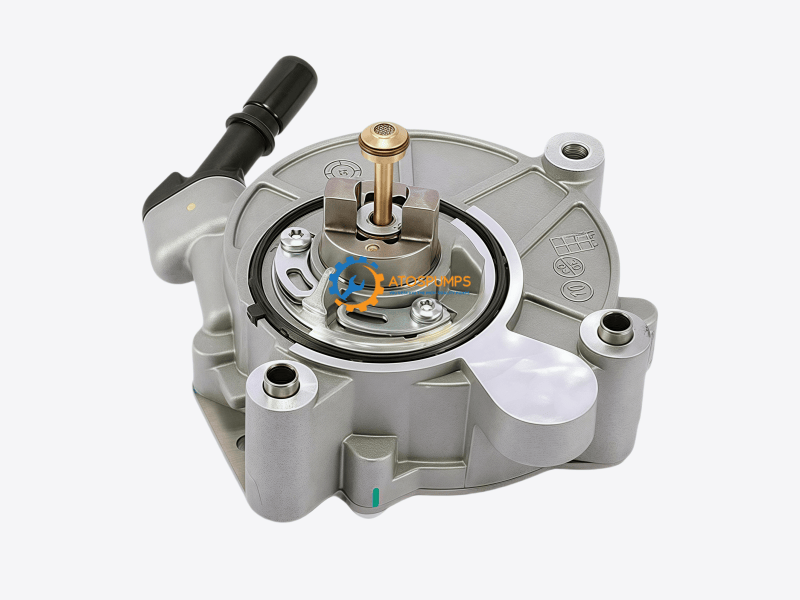

When a brake pedal sinks under your foot on a busy highway, or a diesel engine loses its power assist at the worst possible moment, the culprit is often a failing vacuum pump. Whether you’re maintaining an Audi A4 TDI, a hard-working Isuzu truck, a Dodge Ram pick-up, or a Ford Transit van loaded with tools, the vacuum pump is a silent safety cornerstone. Choosing a quality replacement isn’t just a purchase—it’s an investment in braking integrity and engine performance. Here are five original, in-depth tips to help you buy a vacuum pump that truly lasts, without falling for marketing hype or poorly copied parts.
1. Decode the precise pump technology your vehicle demands
Not all vacuum pumps are a simple bolt-on commodity. Modern vehicles use fundamentally different technologies, and installing the wrong type leads to immediate failure. Start by identifying the pump’s drive mechanism: mechanical pumps driven by the camshaft or an auxiliary belt are common in many diesel engines, while electric vacuum pumps are frequently used on turbocharged petrol engines and hybrid vehicles to decouple vacuum generation from engine speed. An Audi 2.0 TDI, for example, typically uses a mechanical pump with a specific gear interface, often integrated into the high-pressure fuel pump housing. A Madza SkyActiv-D might incorporate a twin-scroll pump with an integrated oil separator to keep crankcase gases from contaminating the brake booster circuit. Opel’s 1.6 CDTI engine family often mounts the vacuum pump directly on the end of the camshaft with a dedicated gasket and oil feed. If you blindly order a universal electric pump for a truck that expects a belt-driven mechanical unit, you will not only lose proper brake assistance but risk creating an electrical overload or CAN bus error. Always check your vehicle’s exact OEM part number, not just the generic “diesel vacuum pump” label. For an Isuzu NPR truck, the pump may include a vacuum switch port for the exhaust brake system; for a Mercedes-Benz Sprinter van, the pump might be a tandem unit supplying both brake booster and EGR actuator vacuum. Knowing this technology distinction is your first filter against disappointment.
2. Demand material and construction quality that mirrors the original
A quality vacuum pump lives inside a hot, oily, vibration-rich environment. Cheap pumps often cut corners on the aluminium housing alloy, rotor vane material, or lip seal compound, leading to premature internal wear, vacuum leaks, and even catastrophic debris entering the engine. Original equipment pumps for brands like Audi and Mercedes-Benz use high-grade, heat-treated aluminium bodies that resist warping under thermal cycling. The internal vanes—usually made from carbon-reinforced polyamide or specially engineered coated steel—must maintain exact tolerances to generate consistent vacuum without excessive friction. For heavy-duty Dodge pick-up trucks with Cummins diesel engines, the vacuum pump must contend not only with engine heat but also with fine dust and off-road vibration. A substandard pump using soft steel vanes will shed metal particles into the engine oil, damaging camshaft bearings. When evaluating a pump, examine the finish of the mating surfaces: any roughness, porosity, or sharp tooling marks indicate a lax manufacturing process. Quality pumps come with a pre-lubricated lip seal made of fluoroelastomer (FKM) rather than generic nitrile, because FKM handles the elevated oil temperatures common in Ford van Power Stroke diesels or Isuzu truck engines far better. Never sacrifice this metallurgical and chemical engineering for a lower price; your vehicle’s lubrication system and braking safety depend on it.
3. Validate real-world performance data, not just catalogue fitment
A listing that claims “fits your vehicle” is not enough. A genuinely qualified vacuum pump will have clear performance specifications: maximum vacuum level (usually 0.7–0.9 bar below atmospheric), flow rate in litres per minute at a given pump RPM, and duty cycle capability. For a commercial Isuzu truck that runs in stop-and-go delivery traffic, the pump must maintain full vacuum even at low idle with the brake pedal repeatedly applied. A pump barely reaching -0.6 bar may work on a bench test but fail to provide sufficient assist when the engine is hot and brake fluid is warm. Similarly, a Madza CX-5 diesel with i-ELOOP regenerative braking may rely on an electric vacuum pump that activates dozens of times per hour; a pump not rated for such a high cyclic duty will overheat and burn out its motor within weeks. Ask the supplier: what is the pump’s ultimate vacuum measured in millibar? What is the evacuation time for a standard one-litre reservoir? If they cannot answer, they are likely selling a copy with unknown internals. For a Dodge pick-up equipped with a vacuum-operated front axle disconnect, the vacuum pump also engages four-wheel drive; a weak pump will cause slow engagement and grinding. Seek pumps that replicate the OEM’s vacuum curve, not just a passable average.
4. Confirm every connection, seal, and interface detail
A vacuum pump doesn’t operate in isolation—it connects to oil galleries, breather ports, electrical plugs, vacuum hoses, and sometimes coolant lines. A single missing O-ring or a connector that doesn’t lock properly turns your new pump into a major leak source. For Opel vehicles, some pumps include a one-way check valve integrated into the outlet nozzle; a replacement without that valve will collapse the brake booster vacuum line. Many Ford Transit and Mercedes-Benz Vito vans have vacuum pumps with a built-in vacuum sensor and a three-pin electrical connector. Aftermarket pumps might come with an unsealed generic connector that causes corrosion and intermittent sensor faults, triggering limp mode. Always compare the new pump side-by-side with your original unit: thread sizes for banjo bolts, presence of a gasket or O-ring seal for the block mating surface, orientation of the vacuum port, and the exact location of the vent. For Audi TDI engines, a common mistake is ignoring the oil drain-back chamber; a pump missing that passage can pressurize the crankcase with air, leading to oil leaks at the rear main seal. A trustworthy supplier will provide high-resolution photos of every angle. In the case of an Isuzu truck with air brakes, the vacuum pump may drive a separate air compressor governor; confirm that the drive coupling spline count and diameter match perfectly. That extra five minutes of inspection saves you from stripping splines and facing days of downtime.
5. Evaluate warranty substance and the seller’s technical depth
A lengthy warranty period means nothing if the seller lacks the expertise to support the product. Many cheap pumps carry a “12-month warranty” printed on a sticker, but when a fault occurs, the seller vanishes or claims improper installation. Choose a supplier that asks you for your vehicle’s VIN or precise engine code—like AUDI’s engine code CAGA, ISUZU’s 4HK1, or Mercedes-Benz’s OM651—and can explain why their pump suits that exact variant. A genuine quality provider will supply not only the pump but also the correct fitting instructions, torque specifications, and often a recommendation to replace the vacuum hose check valve and clean the oil supply port before installation. If you’re servicing a fleet of Ford vans or Dodge pick-ups, look for a commercial-grade warranty that covers not just the part but also a reasonable labour contribution should a manufacturing defect occur. This separate professional sellers from box-shifters. Remember that a vacuum pump failure on a Mercedes-Benz Sprinter ambulance or an Opel Movano delivery van is not a mere inconvenience; it disables a working vehicle and can strand a driver in unsafe conditions. The true cost of a pump is its purchase price plus the risk of downtime multiplied by the consequences of inconsistent vacuum. Investing in a pump backed by real engineering support and an unconditional quality promise is the final and most critical tip.
Choosing a quality vacuum pump for your Audi, Madza, Opel, Isuzu, Dodge, Ford, or Mercedes-Benz is a process of technical matching, material honesty, and supplier credibility. By isolating the correct pump technology, insisting on original-grade materials, verifying genuine performance numbers, checking every physical interface, and leaning on knowledgeable suppliers, you transform a vulnerable component into a guarantee of safety and reliability for every mile ahead.