
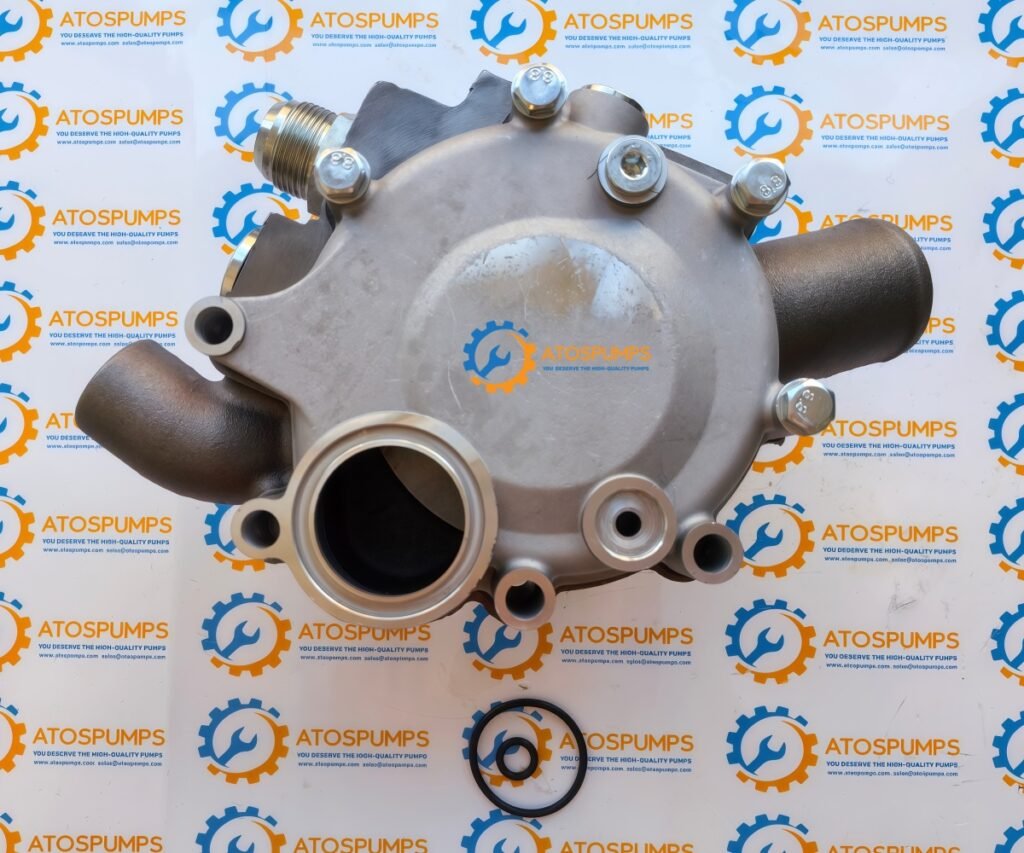

Keeping your heavy machinery, commercial trucks, or premium European cars running at peak performance always comes down to one critical component: the cooling system. At the heart of that system lies the water pump. Whether you are maintaining a Caterpillar bulldozer on a construction site, a Mercedes Benz truck hauling cargo across continents, or a high-performance Alfa Romeo on the open road, a failed water pump means downtime, costly repairs, and potential engine destruction.
However, the market is flooded with generic, substandard components that simply cannot handle the specific thermal loads and engineering tolerances of branded equipment. Finding a truly qualified water pump requires moving beyond basic fitment and examining the engineering behind the casting. To help you protect your investment and avoid premature failure, here are five expert tips to ensure you source only the best.
1. Decode the Specific Engineering of Your Brand, Not Just the Model
A universal approach is the fastest way to destroy a high-tolerance engine. A water pump designed for a Buick sedan operates under entirely different thermal and rotational dynamics than one engineered for a DAF truck or a Deutz agricultural tractor. You must source based on the brand’s specific engineering philosophy.
For European automotive fleets—including Audi, BMW, and Mercedes Benz—prioritize pumps that match the original composite impeller designs and housing materials to prevent electrolysis. For American heavy-duty applications like Detroit or Dodge Ram trucks, the focus shifts to bearing load capacity and high-volume flow rates at low RPM. In the industrial realm, an excavator pump for Caterpillar or Daewoo must withstand constant vibration and debris. Never accept a cross-referenced part without verifying that the casting and impeller geometry were designed for that specific brand’s heat rejection requirements.
2. Scrutinize Metallurgy and Seal Integrity, Not Polish
A shiny exterior finish on a water pump means nothing if the internal metallurgy is soft. The primary cause of premature water pump failure is not a cracked housing, but internal seal collapse and bearing pitting caused by inferior materials. When sourcing a pump for severe-duty cycles—such as a Volvo wheel loader or a Case tractor—you must look beyond the surface.
A qualified pump distinguishes itself in two areas: the mechanical seal and the bearing assembly. Look for carbon-ceramic mechanical seals rather than basic rubber lips. For brands prone to high system pressures, such as Caterpillar engines in wheel loaders and bulldozers, the seal must be rated for intense thermal cycling without warping. Additionally, inspect the bearing specification. A heavy-duty application for a Mercedes Benz bus or a Deutz engine requires a high-precision, double-row bearing integrated directly into the flange. If the supplier cannot confirm the hardness rating of the shaft and the grade of the silicon carbide in the seal, you are looking at a commodity, not a qualified component.
3. Match the Impeller Design to the Duty Cycle
Not all water pumps with the same bolt pattern cool the same. The impeller—the rotating heart of the pump—must be matched to the machine’s duty cycle. This is where many procurement managers for mixed fleets go wrong. A pump that perfectly cools a Chevrolet highway pickup will cavitate and starve the engine in a Caterpillar excavator working at a constant high-torque, low-speed condition.
For high-speed turbocharged engines found in Alfa Romeo or Audi cars, you need a stamped or cast impeller with a back-plate design that reduces fluid drag and prevents aeration at high RPM. Conversely, for massive displacement engines in DAF trucks or Caterpillar bulldozers, a heavy-duty forged impeller with a larger vane diameter is required to move a high volume of coolant immediately upon throttle application. Always ask your supplier if the impeller curvature is CFD-optimized (Computational Fluid Dynamics) for your specific brand. For European buses like the Benz bus or CASE tractors operating in hot fields, the distance between the impeller face and the housing bore—the clearance specification—must be exceptionally tight to prevent pressure loss. If that clearance is generic, your engine will run hot under load.
4. Demand Source-Traceable Standards, Not “Equivalent” Substitutes
The term “OEM quality” is often misused. A qualified water pump for a Mercedes Benz engine or a Detroit Diesel is not just about dimensional agreement; it is about process verification. Before adding a pump to your inventory, demand traceability. The manufacturer must adhere to ISO/TS 16949 certification processes, not just a generic ISO 9001 sticker.
For critical heavy equipment like Deutz-powered excavators, Daewoo machinery, or CAT bulldozers, the pump must pass a hot-and-cold shock endurance test. A qualified pump should have documentation proving it was tested for tens of thousands of cycles without seal leakage. This is non-negotiable for mining and agricultural applications. If you are sourcing pumps for a mixed fleet of Dodge trucks and BMW cars, ensure the supplier uses 100% automated assembly for the bearing-pulley interface. Manual pressing often introduces micro-misalignments that destroy belts and bearings within the first 1,000 hours of operation. True qualification means the component is validated to the performance specification sheet of the brand, not just machined to look identical.
5. Look for a Supplier Engineer, Not Just a Salesperson
The most qualified water pump in the world is useless if it is incorrectly specified for the updated engine revision. European and American brands—from Alfa Romeo to Caterpillar—frequently issue technical service bulletins (TSBs) updating pump designs mid-cycle. A BMW engine might have a revised thermostat bypass that requires a pump with a specific pilot bore depth. A Caterpillar wheel loader may require a lower cavitation threshold due to updated EGR cooling loops.
Your sourcing decision must involve a conversation with a specialist who understands these running changes. A true supplier of qualified water pumps will have application engineers who can cross-reference your chassis or equipment serial number, not just the year. They should warn you if a casting number for a DAF truck has been superseded due to a brittle impeller fault, or if a Chevrolet heavy-duty pump requires a specific gasket material to prevent galvanic corrosion with the block. If the supplier treats a water pump for a Mercedes Benz Actros truck the same as one for a Buick Park Avenue, walk away. You need a supply partner who treats a pump as a precision thermal-management instrument, not a commodity.
Secure Your Engine’s Lifeline
Choosing a qualified water pump for your mixed fleet—whether it’s a high-revving Alfa Romeo, a hard-working Deutz engine, a Volvo loader, or a CAT bulldozer—demands this level of scrutiny. Cutting corners leads to cavitation, overheating, and catastrophic engine teardowns.
If you are currently reviewing your supply chain and demand a partner that meets all five of these rigorous criteria, we are ready to support your business. We specialize in high-grade, traceable water pump solutions precisely engineered for the automotive, heavy-duty truck, construction, and agricultural sectors. Send us your inquiry today with your brand and serial number, and let our engineering team provide you with the qualified solution your machine deserves.