
To choose the right transmission pump, match five specifications to your machine: displacement (cc/rev), maximum pressure (bar/psi), rotation direction, mounting flange, and shaft type. Then verify fluid compatibility and OEM dimensional fit. Get these right and the pump drops in, holds pressure, and lasts; get them wrong and you face leaks, slip, and premature failure.
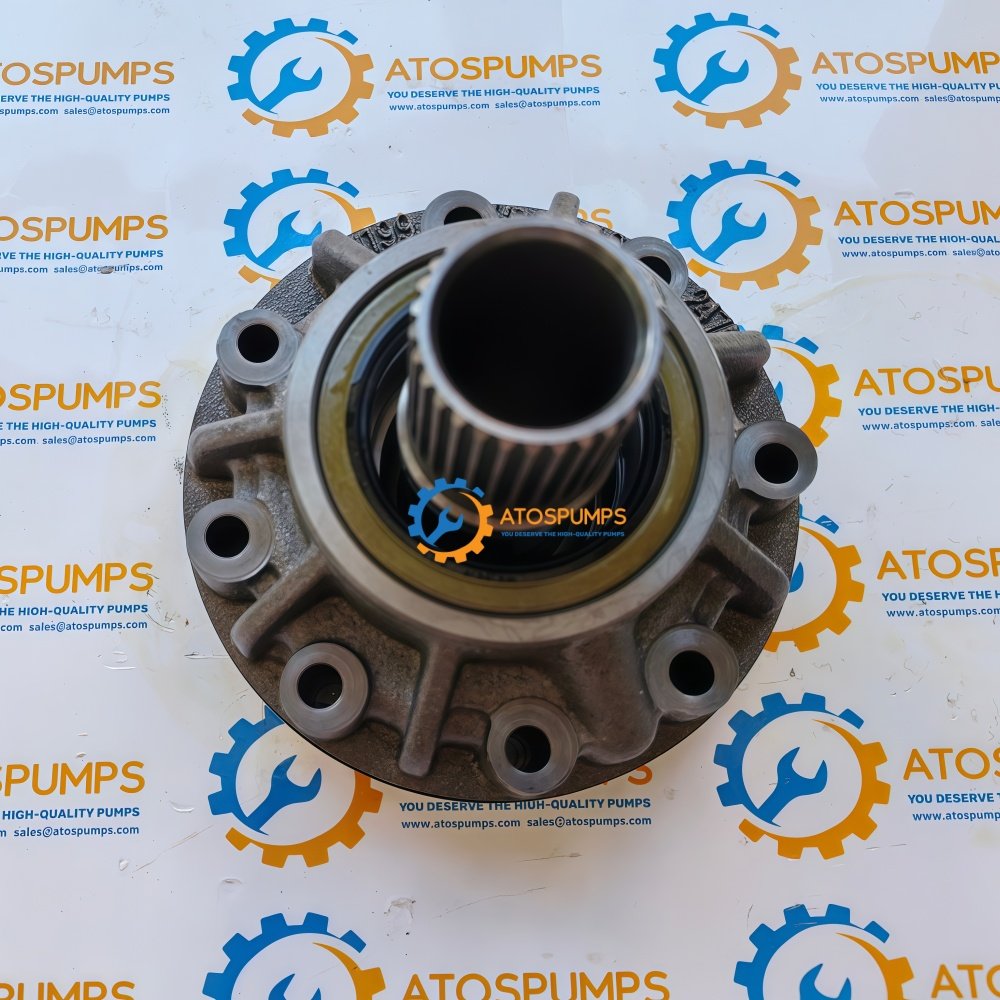
A transmission pump is the pressure source that lets a powershift or hydrostatic transmission engage and drive. Specifying it is not about picking “the biggest” unit—it is about matching the unit to the transmission it feeds. This guide walks through the specifications that actually decide fit and life, the OEM-versus-aftermarket trade-off, and a practical checklist you can use before you buy.
Why Correct Transmission Pump Selection Matters
The wrong transmission pump either cannot supply enough flow at the required pressure, or it fits physically but fails early because the materials or tolerances are wrong for the duty. In a powershift transmission, low pump pressure means sluggish or incomplete clutch engagement; in a hydrostatic transmission, it means lost drive and overheating. Selecting on price alone is the most common cause of repeat failures we see in warranty returns.
Correct selection protects three things: uptime (the machine works when needed), the rest of the drivetrain (starvation and pressure spikes damage clutches and seals), and your margin (a unit that lasts is cheaper than a cheap unit replaced twice).
The 5 Specifications That Decide Fit
| Specification | What it means | Why it matters for a transmission pump |
|---|---|---|
| Displacement (cc/rev) | Volume delivered per shaft revolution | Sets flow at a given input speed; must meet the transmission’s required flow window |
| Maximum pressure (bar / psi) | Highest continuous pressure the pump sustains | Must exceed the transmission’s clutch-engage pressure with margin |
| Rotation direction | Clockwise (CW) or counterclockwise (CCW) | Driven from a specific gear; reversed rotation cavitates and destroys the pump |
| Mounting flange & bolt pattern | How the pump attaches to the housing | Decides whether it is a true drop-in; wrong flange means machining or adapters |
| Shaft type & spline | Drive coupling geometry (keyed, splined, female) | Must match the drive gear; mismatch means no drive or sheared shaft |
Any one of these five being wrong can make an otherwise good pump unusable. That is why a specification sheet—not a photo—should drive the purchase.
Displacement and Pressure: The Flow Window
Your transmission has a required flow at a given input RPM. The transmission pump must deliver that flow at the pressure the clutches need to engage. Two failure modes come from getting this wrong:
- Under-displacement: not enough flow at working RPM → slow or incomplete engagement, overheating under load.
- Under-pressure rating: the pump makes flow but cannot hold pressure → clutches slip, burn, and the transmission fails.
For replacement, the safe path is to match the original equipment displacement and pressure class. If you are uprating a machine, do it with the transmission builder’s data, not by guessing a bigger pump.
Rotation, Mounting, and Shaft: The Physical Fit
These three decide whether the pump is a drop-in or a problem. Rotation is fixed by which side of the gear train drives the pump. Mounting flange and shaft spline are dictated by the transmission case. ATOSPUMPS supplies transmission pumps built to OEM dimensions for common powershift and hydrostatic units, so the flange, bolt circle, and spline line up without modification.
If you are replacing a failed unit, the fastest way to confirm fit is to read the casting number or OEM part number from the old pump and cross it to a dimensionally identical replacement. Never assume two pumps that “look similar” share a shaft or flange.
Gear Pump vs Vane Pump: Which to Select
Most transmission pumps are either gear or vane designs. Gear units are rugged, tolerant of contamination, and simple—ideal for harsh duty and cost-sensitive fleets. Vane units give smoother, lower-pulsation flow and quieter operation but demand cleaner fluid. For a transmission pump in construction or material-handling equipment, a properly specified gear pump is usually the pragmatic default; choose vane only when smoothness or noise is a documented requirement. See our explanation of transmission pump types for the trade-offs in detail.
OEM vs Aftermarket Transmission Pump
“Aftermarket” covers a wide range. A dimensionally correct, pressure-tested unit from a qualified manufacturer is not the same as a no-name copy. When selecting, weigh:
- Dimensional accuracy: does it match the OEM flange, shaft, and rotation exactly?
- Pressure validation: was every unit tested to its rated pressure, or only sampled?
- Material and sealing: shafts, bearings, and seals rated for the duty, not downgraded to cut cost.
- Traceability and certification: ISO 9001-controlled production, batch traceability, and documented testing.
ATOSPUMPS builds transmission pumps to OEM dimensions, pressure-tests each unit beyond the original equipment rating, and runs quieter, longer-life internals—positioned as a qualified OEM-equivalent, not a cheap copy.
Transmission Pump Selection Checklist
- Record the OEM part number and casting number from the failed pump.
- Confirm displacement (cc/rev) and required pressure class from the transmission data.
- Verify rotation direction (CW/CCW) from the drive arrangement.
- Match the mounting flange, bolt circle, and shaft spline to the case.
- Confirm fluid type and cleanliness requirement (especially for vane designs).
- Cross-check the part number to a dimensionally identical, pressure-tested replacement.
- Keep the old unit until the new one is installed and pressure-verified.
Following this checklist turns selection from guesswork into a verified match. For the installation steps after you have the right unit, see our transmission pump installation guide, and for what goes wrong when specs are wrong, our transmission pump problems guide.
Why Specify ATOSPUMPS
For distributors and equipment owners, the selection problem is really a trust problem: will the replacement fit and last? ATOSPUMPS addresses it with OEM-dimension transmission pumps, each pressure-tested beyond the original equipment rating, built under ISO 9001 control, and validated for quiet, long-life operation across powershift and hydrostatic transmissions. That consistency is what lets a parts distributor consolidate suppliers without losing coverage. Our replacement cost guide shows how correct specification lowers total cost versus repeated cheap replacements.
FAQ
How do I know what transmission pump fits my machine?
Read the OEM part number and casting number from the failed pump, then match displacement, pressure class, rotation, mounting flange, and shaft spline. A dimensionally identical, pressure-tested replacement is a true drop-in.
Can I use a higher-pressure transmission pump than original?
Only if the rest of the transmission is rated for it. The pump must meet or exceed the required pressure, but uprating beyond the transmission’s design can damage clutches and seals. Match the OEM pressure class unless the transmission builder advises otherwise.
Does rotation direction really matter?
Yes. A transmission pump driven in the wrong rotation cavitates immediately and fails fast. Rotation is fixed by the drive gear, so it must match the original exactly.
Is a cheaper aftermarket transmission pump worth it?
Only if it is dimensionally correct and pressure-tested, not a no-name copy. A cheap unit that fails early costs more than a qualified OEM-equivalent through downtime and repeat labor. See our replacement cost guide for the math.
What specification is most often gotten wrong?
Shaft spline and mounting flange. Two pumps can look identical but share no drive geometry, so always verify the spline and flange against the transmission case, not just the outer shape.
Request a Quote
Need a dimensionally correct, pressure-tested transmission pump for your powershift or hydrostatic transmission? Send us the OEM part number and we will cross it to the right unit. Request a quote or email sales@atospumps.com.